
Key Insights: Edition 1


U.S. Economy 2026: Fed Policy, AI Productivity & Volatility
Cut through the noise with our 3-part Key Insights series, serving up the most critical conversations, expert views and actionable insights from the BNP Paribas Open Summit.
Key Insights Edition 1: Overview
- Panelists suggest U.S. economy remains strong despite geopolitical shocks
- Fed’s response to inflation amidst rising oil prices and geopolitical risks
- Capital markets challenges: widening spreads and rising yields
- AI to impact bond market, cash management, and treasury roles
- Private credit momentum sustained through innovation and diversification
Decisive action in a changing world
A warm welcome to the first edition of our Key Insights from the BNP Paribas Open Summit 2026 in Indian Wells.
As the world’s top tennis players headed to the baseline of the “fifth grand slam” last week, we kicked off our annual Summit, welcoming clients to our Global Banking and Global Macro and Solutions conferences, featuring industry thought leaders, executive‑level insights, and prime peer-to-peer discussion opportunities.
In recent Summit history, headline-making events have reshaped conversations at the BNP Paribas Open Summit and set the trajectory for our clients for the rest of the calendar year. In 2023, the sudden collapse of Silicon Valley Bank sent shockwaves through the global banking system. An election-year outlook and the escalation of the Russia-Ukraine war dominated discussions in 2024. During last year’s Summit, our audiences debated President Trump’s looming “Liberation Day” tariffs. This week, the U.S.-Israel military conflict with Iran has injected a wave of uncertainty into markets worldwide.
These macro events underline the importance of clients hearing directly from BNP Paribas senior managers, industry subject matter experts, and peers, so they can navigate turbulence with confidence.
The 10 client conferences at the BNP Paribas Open Summit address how clients can plot a path through this new reality. From macro volatility and capital markets strategy to AI integration and private credit, a common question underpins every discussion: how can you take decisive action in an environment that refuses to sit still?
Advantage U.S. economy?
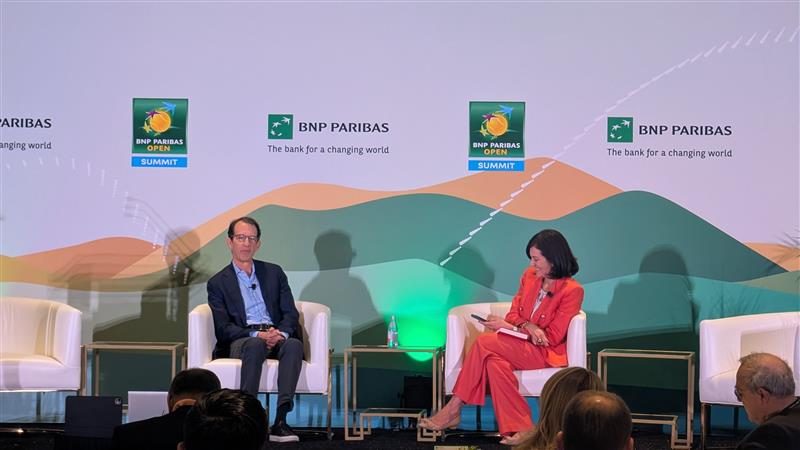
During the Global Macro and Solutions conference, through a number of expert-led panel discussions and keynote presentations, clients heard valuable views and perspectives from James Eglehof, BNP Paribas’ U.S. Chief Economist and Chad Ramey, Head of Government and Regulatory Affairs.
Despite the recent geopolitical shocks and modest pullback in the U.S. equities market, speakers agreed that the stronger outlook for the U.S. economy from early this year remains intact, with one speaker citing four main drivers of growth:
- Monetary policy is stimulative (Fed rates below neutral)
- Fiscal stimulus from the “Big Beautiful Bill”
- Strong equity markets supporting consumer spending
- AI-driven productivity expectations boosting long-term outlook
Panelists noted that monetary and fiscal conditions are stimulative, and with midterms approaching, a significant policy shift is unlikely. Expected productivity gains from AI are already playing out on the upside via increased capex, even if recent nonfarm payrolls data have surprised on the downside.
The U.S. breakpoint?
The major unknown looming over the U.S. economic performance is how the Fed responds to any inflationary shock stemming from the conflict unfolding in the Middle East. While the Fed has historically treated oil price spikes as transitory, a more hawkish response to sustained energy pressures would tighten financial conditions and weigh on growth – though it must also contend with inflation persistently exceeding its 2% target for over five years.
But even absent policy tightening, prolonged uncertainty around the duration of the conflict could slow economic momentum. Speakers remained broadly constructive on the U.S. outlook but emphasized the need to keep a close eye on Fed communication on energy inflation.
Winning the rally: long-term strategy and short-term agility in capital markets
What could this macro uncertainty mean for capital markets and the companies they serve?
If events of the past year have tested the depth and resilience of global capital markets, the real challenges could still lie ahead. The consensus among speakers at our Global Banking Conference was that in the next year, spreads will widen from historic tights, the 10-year treasury yield will rise, and the volume of both high yield and investment grade issuance will increase year-on-year.
For issuers, the response to this higher rate environment should be both strategic and tactical.
Maintaining balance sheet flexibility, including prudent cash levels, and thinking creatively about financing options will be critical. For example, foreign currency issuance has emerged as a more meaningful consideration for U.S. corporates, and hybrid capital also remains attractive, with senior-sub differentials at historical tights making equity-like funding comparatively cheap.
In a volatile market, agility in structure and timing is the winning strategy.
Changing the game: policy mechanics meets structural change
In a structurally higher rate environment, the shape of the yield curve has become increasingly important for investors.
During one presentation, experts discussed concerns that have emerged around a potential “sell America” narrative as global investors reassess their exposure to U.S. assets. On the surface, market indicators remain stable with 10-year Treasury yields broadly unchanged since Liberation Day and overall overseas buying has even increased.
However, speakers noted that underlying demand dynamics suggest more structural pressures may be building. Long-end bonds appear particularly vulnerable, with 30-year yields remaining elevated despite recent Federal Reserve rate cuts – signaling that monetary easing may be becoming less effective at lowering long-term borrowing costs.
At the same time, speakers highlighted that purchases from major holders such as China, India, Brazil and Russia have declined, while European demand – historically a key pillar of the Treasury market – has slowed amid more attractive yield opportunities in Europe and Japan.
In their place, demand is increasingly coming from financial centers and hedge funds engaged in basis trades. While this has helped absorb supply, these buyers tend to be more price-sensitive and less stable than central bank investors, introducing a potential structural vulnerability to the market. During a proceeding discussion, panelists noted one possible approach for policymakers is to adjust the Treasury’s issuance mix by shifting toward short-term bills and limiting long-dated supply to help ease upward pressure on yields. A similar strategy deployed in 2023 helped reduce term premiums by around 60 basis points.
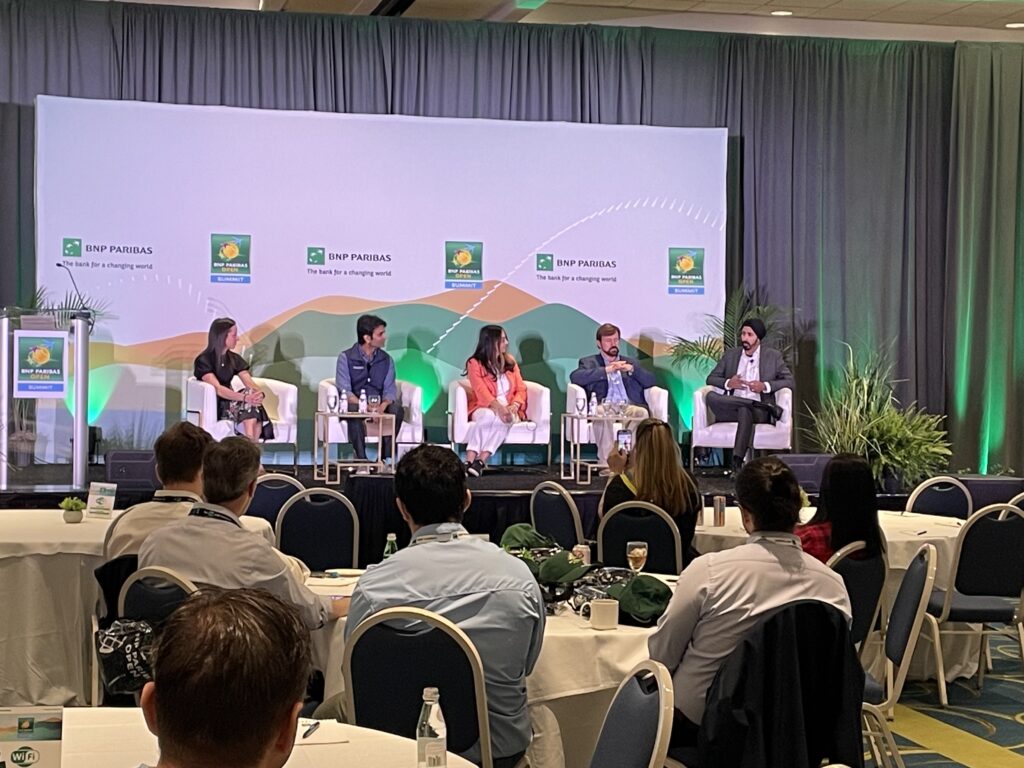
The BNP Paribas Open Summit featured a unique blend of top tier thought leadership and the high energy atmosphere of the world class tennis tournament.
Against the backdrop of the BNP Paribas Open, the first two conferences offered a content rich agenda of panels, fireside chats and keynotes. Industry leaders, policymakers and BNP Paribas strategists shared forward looking analysis on sector trends, investment opportunities and innovative financial solutions.
Beyond the insights, the Summit created a vibrant networking hub where clients connected with peers and experts, sparking dialogue that translated into action.
The event underscored BNP Paribas’ commitment to be a trusted partner, helping clients navigate an ever evolving financial landscape with the same drive for excellence that defines the Open.
How will the Fed play AI?
Overlaying all of this is AI. As one speaker noted, how the Fed frames AI’s impact will ultimately shape how the bond market prices it.
Under a Warsh-led Fed, in an echo of the 1990s Greenspan era, AI could be framed as a productivity-driven, disinflationary force, providing the counter argument to additional policy tightening.
Over time, however, higher trend growth would also be consistent with a higher equilibrium real rate. AI therefore complicates the rate outlook, as a potential anchor to inflation in the short term, while supporting a structurally higher real rate environment over time.
New skills, new drills: AI use cases are already here
So much has been said about the transformative impact of AI on productivity across the global economy, yet the practical implications of new technologies across multifaceted workstreams can still feel abstract.
At our Global Banking Conference, one session centered on the practical use cases of AI, particularly for those in treasury or finance roles.
By automatically tracking global cash positions, predicting liquidity gaps, and triggering funding or investment decisions, agentic AI is changing cash management from a merely manual-monitoring exercise into real-time intelligent oversight. It can also accelerate decision-making by automating such labor-intensive tasks as spreadsheet reconciliation, by flagging risks and by producing usable insights.
As AI technologies continue to evolve rapidly, knowing where to begin the integration journey can feel overwhelming. Panelists advised not to wait for the “perfect” entry point for AI integration and simply start by selecting a small number of high-value use cases to begin implementation. Over the longer term, as technologies and use cases alter traditional ways of working, the winners will be those with the governance frameworks to certify and deploy new AI capabilities confidently at pace.
Private Credit: Maintaining momentum
During a client-led panel, experts discussed the tremendous growth in private credit over the past decade – that has been fueled by both investors and demand for alternative forms of financing among borrowers and debated the important question: how are managers sustaining that momentum? This was a central question at our Global Macro and Solutions Conference.
Innovation in capital formation across both equity and debt has been key. Panelists highlighted the use of multi-currency and regional collateralized loan obligations (CLOs), alongside documentation features such as Sharia‑compliant provisions to broaden the global investor base, while preserving credit discipline.
On the equity side, while retail is an increasing area of focus for many managers, durable institutional partners remain the bedrock, complemented by a range of vehicles designed to meet differing liquidity and leverage needs – from separately managed accounts to business development companies.
On the liability side, strong banking partnerships are foundational. While often framed as competitive, the dynamic between banks and private credit should be seen as symbiotic. For managers, banks not only serve as the core providers of revolving credit facilities, fund-level leverage and term financing, but also bring deep familiarity with underlying portfolios to support managers across multiple layers of the capital stack.
Around this foundation, managers are selectively broadening their funding mix through private credit CLOs, unsecured bonds and longer‑dated financing, strengthening resilience across cycles without displacing core banking partnerships.
BNP Paribas Open: Serving up records
The middle weekend at Indian Wells turned the BNP Paribas Open into a full court showcase with a record 58,828 fans pouring through the gates on Friday, shattering the previous record of 57,038 last year and bringing an electric atmosphere.
On court, Greece’s resurgent powerhouse Maria Sakkari dispatched Austria’s rising teen Lilli Tagger – whose one-handed backhand took the spotlight (a rarity for female players) – while defending champion Mirra Andreeva celebrated her 100th tour level win. The desert’s temperature swing demanded a wardrobe shuffle from sunscreen to cardigans, and the heat didn’t spare the action: American Brandon Nakashima and Germany’s Alexander Zverev battled under a scorching sun before Zverev edged it, and 20-year-old Learner Tien returned Ben Shelton’s famous 144 mph serve to win Shelton’s service game and go on to secure a victory. Naomi Osaka, dazzling in a leopard print Nike dress and gold accents, survived a three-set grind to advance in the tournament.
———————————————————————————————————————————————————————————
Scoring Points for Change at the BNP Paribas Open
As the action heats up at the 2026 BNP Paribas Open, each serve, rally and winner has an impact beyond the scoreboard.
Through BNP Paribas’ Points for Change initiative, every point scored at this year’s tournament generates a $1 donation to Girls on the Run International, a nonprofit that delivers after-school programs designed to help girls build confidence, leadership skills, and healthy habits. All funds will be used to support its evidence-based programs nationwide and local programming in the Coachella Valley.
You can follow the Points for Change tally here or head to our LinkedIn page for the latest updates.
This year, it’s not just the pros making an impact. In our “Play Like a Pro” ping pong tournament – held in the BNP Paribas Client Lounge throughout the Summit – every point scored by our clients will generate an additional $5 donation for Girls on the Run.
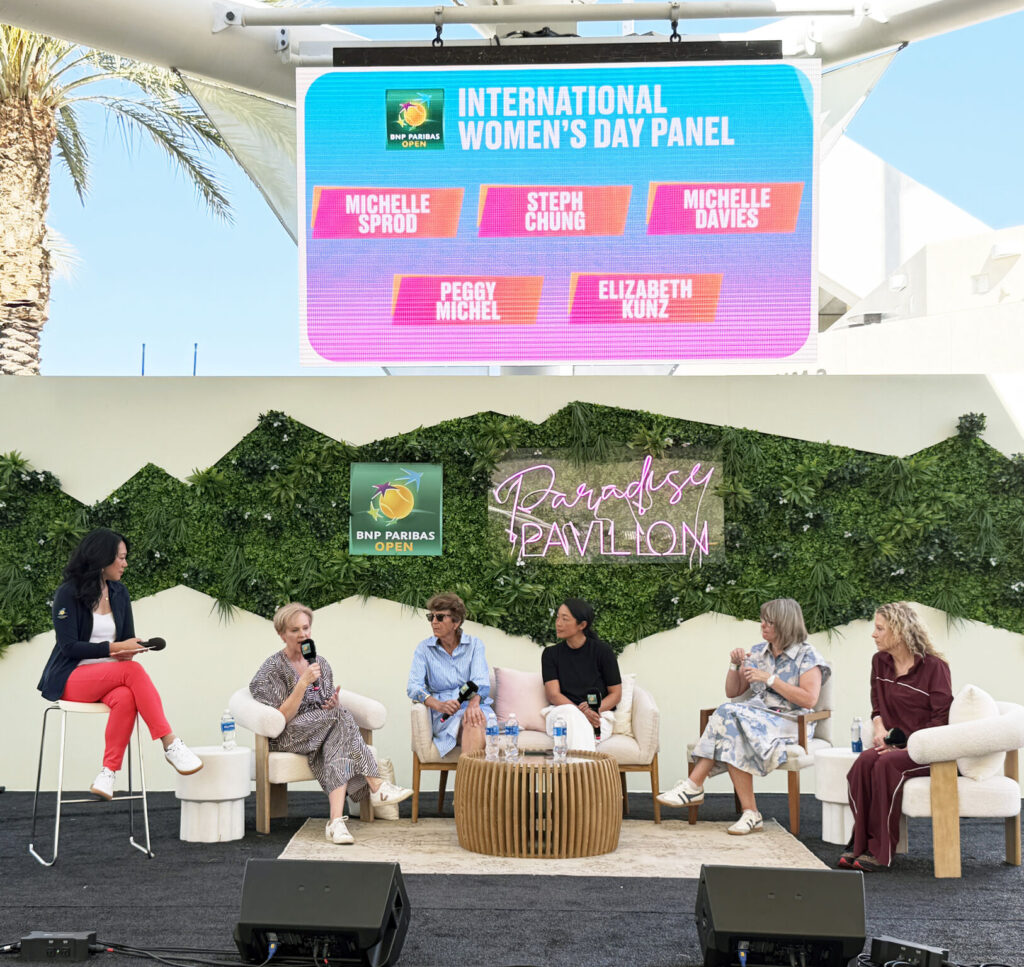
This marks the fourth year of our partnership with Girls on the Run. As the organization celebrates 30 years of building confidence, connection, and leadership through sport, Liz Wian, CEO, joined fellow leaders onstage at the Open on International Women’s Day to discuss strengthening confidence, visibility, and investment in women’s sport.
About the BNP Paribas Open Summit
The BNP Paribas Open Summit gathers more than 500 corporate and institutional clients, issuers, and investors for two weeks of high-impact strategic dialogue and dynamic market insight. Across 10 curated conferences, clients engage directly with senior leaders and market specialists to explore the forces reshaping sectors, capital markets and investment decision-making.
As title sponsor of the BNP Paribas Open, we extend the experience beyond the conference room through exclusive relationship-building experiences and community initiatives that reflect our commitment to equity, partnership, and performance at every level of the sport. The BNP Paribas Open – known as the “the fifth Grand Slam” – provides a vibrant backdrop for the Summit, hosted by BNP Paribas Corporate and Institutional Banking (CIB), Americas. Learn more about our client platforms and capabilities across Global Markets, Global Banking and Securities Services at BNP Paribas CIB – The bank for a changing world.
This material is for informational purposes only and is not intended to be a complete and full description of the products of BNP Paribas and its affiliates or the risks they involve. Additional information is available upon request. Neither the information nor any opinion contained in this mateThis material is for informational purposes only and is not intended to be a complete and full description of the products of BNP Paribas and its affiliates or the risks they involve. Additional information is available upon request. Neither the information nor any opinion contained in this material constitutes a recommendation, solicitation or offer by BNP Paribas or its affiliates to buy or sell any security, futures contract, options contract, derivative instrument, financial instrument, or service, nor shall it be deemed to provide investment, tax, legal, accounting or other advice. All opinions, information, and estimates in this material constitute BNP Paribas’ or its affiliates’ judgment as of the date of this material. This material is only intended to generate discussions regarding particular instruments anThis material is for informational purposes only and is not intended to be a complete and full description of the products of BNP Paribas and its affiliates or the risks they involve. Additional information is available upon request. Neither the information nor any opinion contained in this material constitutes a recommendation, solicitation or offer by BNP Paribas or its affiliates to buy or sell any security, futures contract, options contract, derivative instrument, financial instrument, or service, nor shall it be deemed to provide investment, tax, legal, accounting or other advice. All opinions, information, and estimates in this material constitute BNP Paribas’ or its affiliates’ judgment as of the date of this material. This material is only intended to generate discussions regarding particular instruments and financing and/or investments opportunities and is subject to change, or may be discontinued, without notice. This material should neither be regarded as comprehensive nor sufficient for making financing and/or investment decisions, nor should it be used in place of professional advice. You should consult your own advisors about any products or services described herein in order to evaluate the merits, suitability, and financial, legal, regulatory, accounting and tax issues raised by any investment and should not rely on BNP Paribas or its affiliates for this. Information contained herein is derived from sources generally believed to be reliable, but no warranty is made that such information is accurate, complete or fair and should not be relied on as such. The offer and sale of securities to institutional investors may only be made through the U.S. registered broker dealer and futures commission merchant entity, BNP Paribas Securities Corp.d financing and/or investments opportunities and is subject to change, or may be discontinued, without notice. This material should neither be regarded as comprehensive nor sufficient for making financing and/or investment decisions, nor should it be used in place of professional advice. You should consult your own advisors about any products or services described herein in order to evaluate the merits, suitability, and financial, legal, regulatory, accounting and tax issues raised by any investment and should not rely on BNP Paribas or its affiliates for this. Information contained herein is derived from sources generally believed to be reliable, but no warranty is made that such information is accurate, complete or fair and should not be relied on as such. The offer and sale of securities to institutional investors may only be made through the U.S. registered broker dealer and futures commission merchant entity, BNP Paribas Securities Corp.rial constitutes a recommendation, solicitation or offer by BNP Paribas or its affiliates to buy or sell any security, futures contract, options contract, derivative instrument, financial instrument, or service, nor shall it be deemed to provide investment, tax, legal, accounting or other advice. All opinions, information, and estimates in this material constitute BNP Paribas’ or its affiliates’ judgment as of the date of this material. This material is only intended to generate discussions regarding particular instruments and financing and/or investments opportunities and is subject to change, or may be discontinued, without notice. This material should neither be regarded as comprehensive nor sufficient for making financing and/or investment decisions, nor should it be used in place of professional advice. You should consult your own advisors about any products or services described herein in order to evaluate the merits, suitability, and financial, legal, regulatory, accounting and tax issues raised by any investment and should not rely on BNP Paribas or its affiliates for this. Information contained herein is derived from sources generally believed to be reliable, but no warranty is made that such information is accurate, complete or fair and should not be relied on as such. The offer and sale of securities to institutional investors may only be made through the U.S. registered broker dealer and futures commission merchant entity, BNP Paribas Securities Corp.